
A quieter edge of the city with some very large neighbors
At the southern end of Dania Beach, the city meets John U. Lloyd Beach State Park, a long stretch of protected shoreline, and beyond it the entrance channel to Port Everglades. The result is a place with a split personality. On one side, the beach and the trees give a calm, natural feel. On the other, large ships pass at the inlet and the surrounding area carries the hum of a working port. State Road A1A runs along the coast, connecting these worlds, and homes and small buildings sit within reach of both.
For electrical work, that setting has several consequences. The first is exposure. Being close to the ocean, the inlet and the beach, buildings here face the same salt air that affects the whole coast, and often with strong, steady wind. Equipment installed outdoors should be chosen and maintained with that in mind. The second is the character of the neighborhood. Park lands and beach access mean that surroundings are less built up than inland parts of the city, and that matters for lighting, for rules and for how outages are experienced. The third is the mix of uses. Some properties are long term homes. Others are rentals, vacation stays or small businesses that serve park visitors and boaters.
Electrical needs follow those uses. A long term resident wants a safe, comfortable home that stays cool in summer and survives storm season. A landlord wants a unit that rents easily and does not generate service calls. A small business owner wants reliable lighting, refrigeration and point of sale equipment. All of them benefit from sound fundamentals: a healthy panel, ground fault protection where required, working smoke and carbon monoxide alarms, surge protection, and a plan for outages.
This page is intended to help neighbors think through those fundamentals in the context of this particular edge of the city. It is general education, not a substitute for an inspection, and it does not describe any particular property. A quote can begin with a phone call in which you describe your building and your goals, but for anything beyond simple work, an electrician needs to see the building to plan correctly.
If you are new to the area, a useful first step is to ask yourself three questions. How close am I to the water, and what has the air done to the outside of my building? How do I use the property, and does that match what its wiring was built for? And what would I need to keep running if the power failed for several days? The answers point to the sections below.
Nighttime, outdoor lighting and respect for the shoreline
Lighting near a beach is not only a matter of taste. Many coastal communities ask residents to be thoughtful about outdoor lights, because bright lighting at night can disturb wildlife on the shore, including nesting sea turtles in season. Rules about shoreline lighting vary by location, and the city or county can tell you what applies at your address. As a general principle, lights that are shielded, aimed downward, warm in color and used only when needed are good neighbors to the beach.
That principle fits well with good electrical practice. Shielded fixtures that direct light where it is needed, rather than into the sky or onto the sand, reduce glare and save energy. Warm toned lamps tend to be gentler on night vision and on wildlife than cool bluish white ones. Timers, motion sensors and photocells let lights come on when needed and turn off when not. Each of these controls is an electrical component that needs correct wiring and a suitable rating for the weather.
For safety, entrances, stairs, walkways, driveways and parking areas still need to be lit enough that people do not trip. The balance is to light the path, not the property. Low level fixtures, well shielded wall lights and step lights can deliver that. Low voltage systems are popular for pathway lighting, and our page on line voltage and low voltage landscape lighting explains the trade offs in wiring, safety and flexibility.
Here are lighting ideas that suit a property near a beach:
- Use fully shielded fixtures that aim light downward.
- Choose warm color lamps rather than cool white.
- Put exterior lights on timers, photocells or motion sensors, so they are not on all night.
- Light entries and steps first, and leave dark areas dark when safety is not at stake.
- Use fixtures rated for wet and corrosive locations, with sealed housings.
- Check any local lighting rules before installing or changing fixtures near the shore.
Inside, window coverings in rooms that face the beach can help reduce light that spills outdoors at night, and they can also reduce heat gain. That is not an electrical matter, but it fits the same goal.
Control wiring for outdoor lights can be simple or complex. A basic timer at a switch is easy. A system with multiple zones, sensors and a central controller needs planning, with a proper power supply, protected circuits and a clear layout. Ask for a diagram of what is installed, and keep it with your property records. Future repairs will be simpler.
Finally, remember that rules and best practices evolve. If you plan significant exterior lighting work, check with the relevant authority before you begin, and keep notes of what was approved.
Homes, rentals and short stays near the park
Properties near a popular beach tend to have unusual patterns of use. A house that is quiet most of the week might be full on a holiday weekend. A unit that sits empty during a slow stretch may suddenly host a large group. These cycles stress electrical systems in particular ways.
The most common problem in rental properties is overload during peak occupancy. When many people are staying, they run air conditioners, kitchen appliances, hair dryers, phone chargers and televisions at the same time. Circuits that were fine for a couple trip when a family of six is present. If you manage a rental, look at the load in the kitchen, the bedrooms and the main living area, and make sure that circuits are separate and sized for use. A dedicated circuit for each major appliance, enough receptacles in the right places, and clear breaker labels make a rental easier to run.
Safety devices are the second theme. Smoke alarms in every sleeping area and on every level, carbon monoxide alarms near sleeping areas and fuel burning equipment, ground fault protection in kitchens, bathrooms, garages and exteriors, and arc fault protection where required, are the baseline. Test them at changeovers, and replace them when they expire. Provide a written note for guests that explains where the panel is, what to do if a breaker trips and who to call. Clear, friendly instructions reduce calls.
Third is the question of heat. Many near beach homes have older air conditioners working hard in summer. A system that runs constantly and struggles to cool can overheat wiring and breakers, and it is a major source of high bills. Make sure the condenser disconnect and its wiring are in good condition and have not been damaged by salt. Make sure the circuit matches the nameplate. Keep the area around the condenser clear, and keep the unit level and secure.
Fourth is waterproofing. Outdoor showers, hot tubs, grills and gazebo lighting are popular near the beach. Each requires correct ground fault protection, appropriate distance from water, and weather rated equipment. Outdoor showers in particular often have receptacles or lights nearby that need to be installed with care. A hot tub requires a dedicated circuit, a disconnect within sight but at a safe distance, and bonding. These are not do it yourself matters.
Finally, think about how guests treat a property. Small touches like labeled switches, nightlights in hallways, enough outlets by beds and tidy cord management make a rental feel safe and cared for, and they reduce the chance that someone improvises with a risky extension cord.
Wind, vibration and living beside a working inlet
Port Everglades is one of the busier ports in the region, and its entrance channel sits at the southern edge of the area. Ships, tugs, pilots and pleasure craft pass constantly. Even if you never see the traffic, you may feel it in the form of low sounds, vibration or the presence of marine radio. How does that relate to electrical work?
The more direct influence is on exposure. Inlets funnel wind and water. Wind off the open water can be stronger and more persistent at an inlet than on an interior street, and that affects anything mounted outdoors. Service masts, weatherheads, overhead lines and exterior fixtures face more stress. It is wise to check the attachment of masts and fixtures, to confirm that fasteners are secure and corrosion resistant, and to trim vegetation that could fall on lines in a storm. Tree work near utility lines is done by the utility or qualified tree professionals, not by homeowners.
Vibration, where it exists, loosens connections. A heavy truck going by regularly, a nearby construction project or equipment mounted on a shared wall can all vibrate screws over time. Loose connections generate heat. Panels and receptacles in a building that experiences vibration benefit from periodic inspection, in which a qualified person checks tightness at terminals. If you notice a receptacle that feels loose in the wall, a switch that crackles, or a light that flickers when a door slams, mention it.
Marine radio and electronic equipment add other considerations for boat owners and people who live on or near the water. Good grounding and bonding reduce noise in equipment and improve safety. Boaters who keep a vessel at a dock should read our pages on shore power and on dock and boat lift power. Home electronics benefit from surge protection, which absorbs spikes that arrive on power lines.
Another note concerns the grid itself. Coastal infrastructure endures weather that inland systems do not, and outages can come from salt on insulators or from storms. Home equipment should be able to cope with brief interruptions and returns. A whole house surge protective device and point of use protection for sensitive equipment are good defenses.
Finally, remember that the area around the park and the port has its own rules and approvals for building and utility work. Before beginning exterior projects, check with the city building department about permits and any restrictions on the location, height or type of equipment. An electrician can help with the paperwork for electrical aspects.
Beach days, outdoor power and small commercial needs
People who live near a beach use outdoor space more. Patios, decks, yards and driveways become extensions of the home. Outdoor power then moves from an afterthought to a daily need.
Receptacles outdoors should be ground fault protected and weatherproof, with in use covers. Place them where you will actually use them: near the grill, by the seating area, close to where holiday lights go, at the garage door, near the driveway for a vehicle charger or a pressure washer. Having enough outlets avoids the temptation to run extension cords through doors or windows. A cord pinched in a door can overheat and damage insulation.
Outdoor kitchens and bars are popular. They tend to include refrigerators, ice makers, lighting and sometimes small appliances. Each one needs the right circuit and protection, and the circuit must be sized for the equipment. Outdoor refrigerators are not the same as indoor ones, because they must tolerate heat and humidity. Check that equipment is rated for outdoor use. Place receptacles away from sinks and splash zones and use ground fault protection.
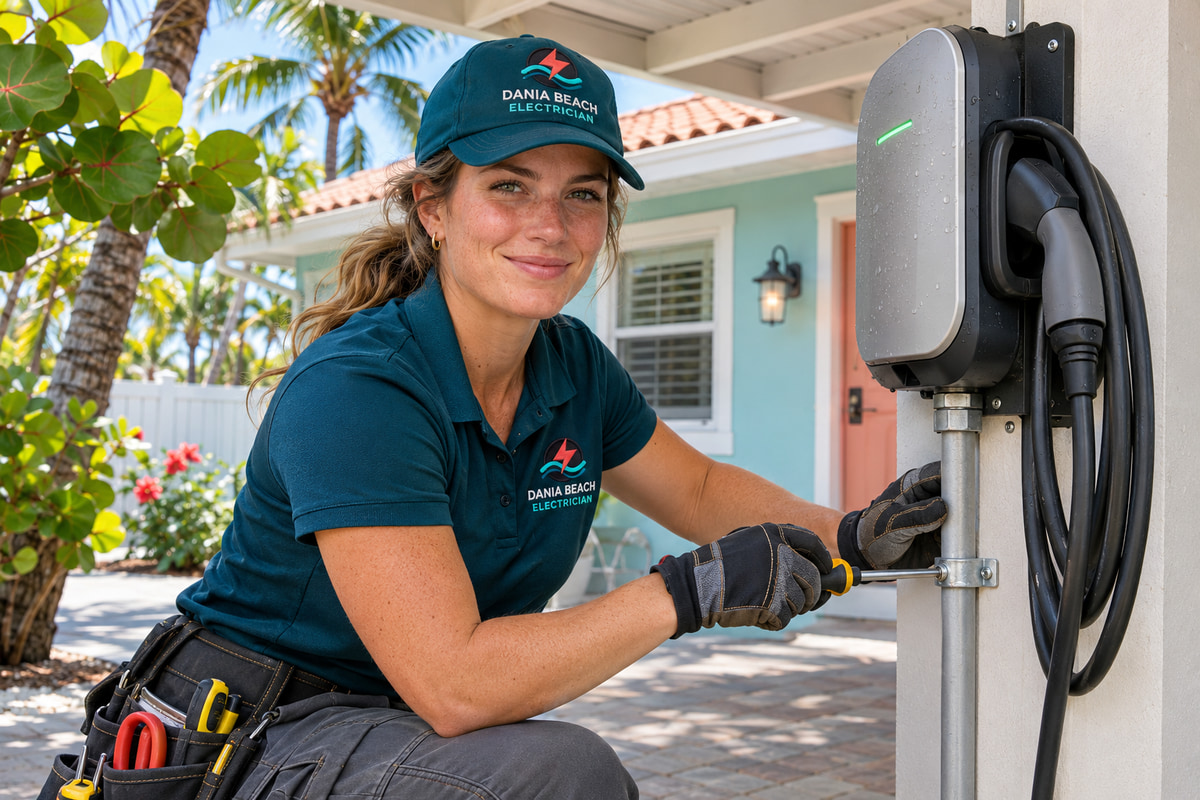
Electric vehicle charging is increasingly common at homes near the coast. A charger needs a dedicated circuit, and because it is a long running load, the circuit must be sized with margin. Outdoor chargers must be rated for the weather. If the charger is in a carport or driveway, consider salt exposure and mount it with corrosion resistant hardware. A page on this site discusses electric vehicle charger installation, and another discusses surge protection.
Small businesses near the park, such as rental shops, snack stands or boat services, have their own needs. They usually have seasonal peaks and tight margins. Reliable power for refrigeration, lighting and payments matters. A business owner should know the location of the main breaker, keep a clear path to it, and keep a simple record of which circuit feeds which equipment. Surge protection and a plan for outages protect inventory.
Consider also temporary events and set ups. Tents, string lights, music equipment and food trucks all use power. Temporary power distribution has its own rules. Use cords and distribution equipment rated for outdoor and heavy duty use, protect connections from water, and keep cords out of walkways. If an event is large or repeating, a permanent solution, installed by an electrician, is safer than improvising.
Finally, remember sand. Sand gets into everything near a beach, including outdoor outlets, switches and fixtures. It scratches seals, jams covers and holds moisture. Cleaning and inspecting fixtures regularly keeps them working.
A short rinse with plain water, with the power off at the breaker and the fixture cool, removes salt and sand from the outside of a fixture. Dry it afterward and never spray water into a box, a panel or a light socket. If a fixture needs more than a surface cleaning, such as a lens full of water or a corroded socket, replace the parts instead of trying to dry them out.
Outages, evacuation and getting back up after a storm
Residents near the state park and the inlet know that storm preparation is part of life. Evacuation orders can come for coastal areas before inland ones, and a property may sit unattended for days. Plan the electrical side of that.
Before leaving, consider shutting off the main breaker if flooding is likely, after shutting off large appliances. That reduces the risk of shorts and fires if water enters. Unplug sensitive electronics and move them to higher places. Turn off propane or natural gas according to your gas provider's guidance. Photograph your panel, meter and equipment for your records. If you have a generator, store it safely and do not leave it running.
When you return, do not assume the property is safe. Look from the outside first. Check for downed lines, tilted meters and damaged masts. If any are present, stay away and report to the utility. Enter carefully, and if you see standing water, smell burning or hear buzzing, do not touch the panel or switches. Call for help. Our storm damage repair page walks through inspection and repair in sequence.
If the property is dry and undamaged, turn on the main breaker first, then individual breakers one at a time, watching for unusual smells, sounds or tripping. Allow the air conditioner a few minutes before starting it, to avoid a surge when power may still be unsteady. Check that refrigerator contents are safe, since extended outages can spoil food.
Generators help, but they must be used correctly. Run them outdoors, far from windows and doors. Never connect them to a wall outlet. Use a proper inlet and transfer arrangement, installed by a qualified electrician, or plug appliances directly into the generator with suitable cords. Keep fuel in approved containers away from living space. Install and test carbon monoxide alarms. Our pages on running a generator safely and on standby hookups offer more detail.
Flood prone locations should consider raising equipment, using water resistant materials where permitted, and planning circuits so lower levels can be shut off separately. Ask the city about rules that apply to renovations in flood zones.
Finally, keep a home electrical folder. Include permits, inspection records, panel photographs, equipment manuals and contact information for your electrician and utility. In an emergency, you will thank yourself. A worked example shows why this folder matters. A rental owner who evacuated before a storm returns to find the power out and a faint musty smell in the utility closet. Because the folder holds a photograph of the panel taken before the storm, the electrician can see at a glance that a breaker label and a cover screw are different now, which points to moisture entering at the wall. The panel is dried, evaluated and, because it was wet, replaced in part. The insurer receives the before photographs, the permit and the inspection approval together, and the claim moves faster. Without the folder, each of those steps would have needed hunting through email and memory. If you rent the property out, add the contact details of the person who has the key and the person who can authorize repairs, so that a decision can be made quickly when you are away. If you want help building a plan, call and describe your situation. A quote can start by phone, and larger jobs are planned after an on site visit.
Places this page covers
This page covers the southern edge of the city near John U. Lloyd Beach State Park, the blocks along State Road A1A, and homes and small businesses that sit within sight of the entrance to Port Everglades.
Nearby places and related reading
To the north, see the Dania Beach Pier and oceanfront page. For commercial buildings along the highway, see Federal Highway in Dania Beach. Related guides cover lighting installation and thirty amp versus fifty amp shore power.